Why You Still Need a Layer in an Air-Conditioned Gym in August

Quick Answer: Commercial gyms run their air conditioning for the cardio floor at peak effort, which means 65 to 68 degrees of moving air hitting you while you rest between sets - cold enough to stiffen warmed-up muscles, tighten your breathing, and drain the warm-up you spent ten minutes building. A light removable layer solves it: worn in, kept on through warm-up and rest periods, stripped for hard sets. In August the problem is sharpest because you arrive sweat-damp from outside heat, and damp skin under AC vents loses heat several times faster than dry skin.
You walked in from a 95-degree parking lot, and fifteen minutes later you are rubbing your arms between squat sets like it is January. Both of those temperatures are real. Your outfit has to handle the second one.
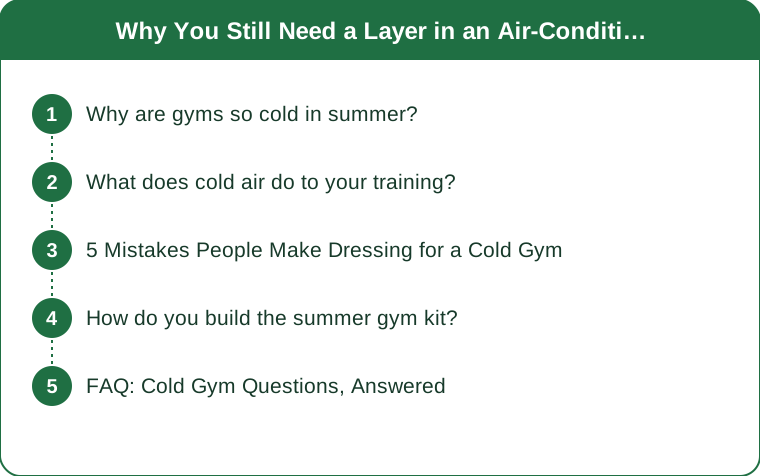
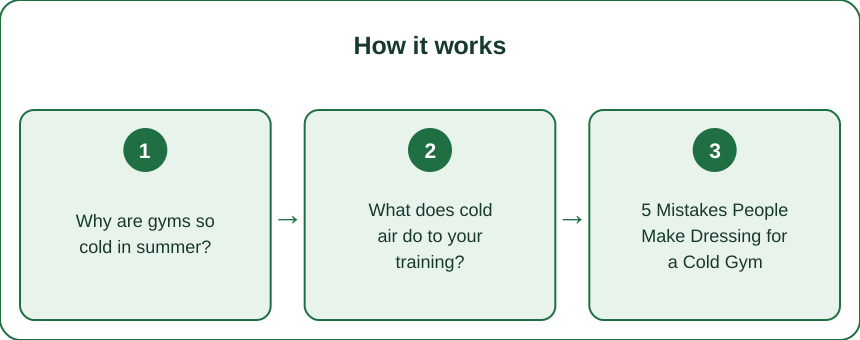
Why are gyms so cold in summer?
The thermostat is not broken. It is just not set for you.
Gyms cool for the hardest-working person in the room. HVAC targets are set so the person sprinting on the treadmill in the warmest corner stays comfortable. If the cardio rows feel right at full effort, the stretching area feels like a meat locker at rest.
August makes the machines work overtime. When it is 95 outside, systems run constantly and unevenly - blasting near vents, stuffy in dead corners. The temperature on the thermostat and the temperature on your bench can differ by several degrees.
Moving air multiplies the cold. Vents and fans strip away the warm air layer your body maintains at the skin. Sixty-six degrees of still air is mild; sixty-six degrees blowing across sweat-damp shoulders is genuinely cold stress.
You arrive pre-dampened. The walk from the car in August heat starts your sweat before the workout does. Damp skin and a damp top transfer heat away far faster than dry - which is why the first ten minutes inside can feel colder than the rest of the session.
Rest periods are the exposure window. During a hard set you produce enough heat not to care. Between sets - two to four minutes of standing still, repeated a dozen times - your surface temperature drops steadily, and lifting sessions are mostly rest periods by the clock.
The result is a workout spent cycling between hot and chilled, which is precisely the situation layers were invented for.
What does cold air do to your training?
Being chilly between sets is not just unpleasant - it quietly costs performance.
Warm muscle works better, and cold undoes warmth fast. Elevated muscle temperature improves contraction speed and range of motion, which is half the point of warming up. Standing in AC airflow between sets bleeds that temperature back out; by the third rest period, your warm-up has partially expired.
Stiffness returns to exactly the wrong places. Hips, hamstrings, and shoulders - the areas you mobilized - tighten first when surface temperature drops. The set after a long chilled rest feels creaky at the bottom of the squat, and that is not your imagination.
Cold air changes your breathing. Chilled, dry air encourages shallower breathing, and shivery muscle tone raises baseline tension. Neither helps a heavy set that depends on a big brace and full exhale.
Damp cold is the worst combination. A sweat-soaked tank under a vent produces the clammy, goosebumped state that makes people cut sessions short. The discomfort is real thermal stress, not weakness.
Blood flow follows temperature. Cold skin means constricted surface vessels, and re-warming tissue mid-session takes work your first set back has to pay for.
None of this means AC gyms are bad - summer training would be worse without them. It means the between-set state is a managed variable, and clothing is the management tool. The people who train in a light layer and strip it for work sets are not overdressed; they are running their warm-up like an asset.

5 Mistakes People Make Dressing for a Cold Gym
Mistake 1: Dressing for the parking lot. The August instinct is minimum fabric, but you spend three minutes in the heat and sixty in the AC. Dress for the sixty, carry comfort for the three - the layer weighs nothing in a gym bag.
Mistake 2: Bringing the winter hoodie. A heavy fleece overshoots - you roast during sets, sweat harder, then chill worse when you take it off. The summer gym layer is light: a thin zip-up, a long-sleeve tech tee, a woven warm-up jacket. Enough to block airflow, not enough to cook in.
Mistake 3: Staying in the sweat-soaked top. The damp tank is the cold engine. A dry backup tank in the bag - swapped after the cardio warm-up or a sweaty first block - changes the entire back half of the session for the cost of one extra garment in the wash.
Mistake 4: Pullover layers over a barbell schedule. A pullover means hat-hair, tangled earbuds, and a two-handed operation you will skip by the fourth rest period. Zip-front layers get put on and taken off ten times a session precisely because they cost nothing to operate.
Mistake 5: Bare legs under the squat rack vent. Shorts in a cold gym leave the biggest muscles you are training exposed to moving air. Full-length leggings are the summer-gym cheat code: high-waisted leggings in a light fabric keep quads and hamstrings warm through rest periods without adding any real heat during sets - and if your rack happens to sit under a vent, they are the difference between staying loose and re-warming every set.
How do you build the summer gym kit?
One bag, four pieces, no thinking required at 6am.
The base: sweat-wicking tank or tee plus full-length leggings. Wicking fabric matters double in an AC gym - the faster your base dries, the less time you spend in the damp-and-chilled state. Buttery-soft leggings in a midweight knit cover the legs without reading as winter gear.
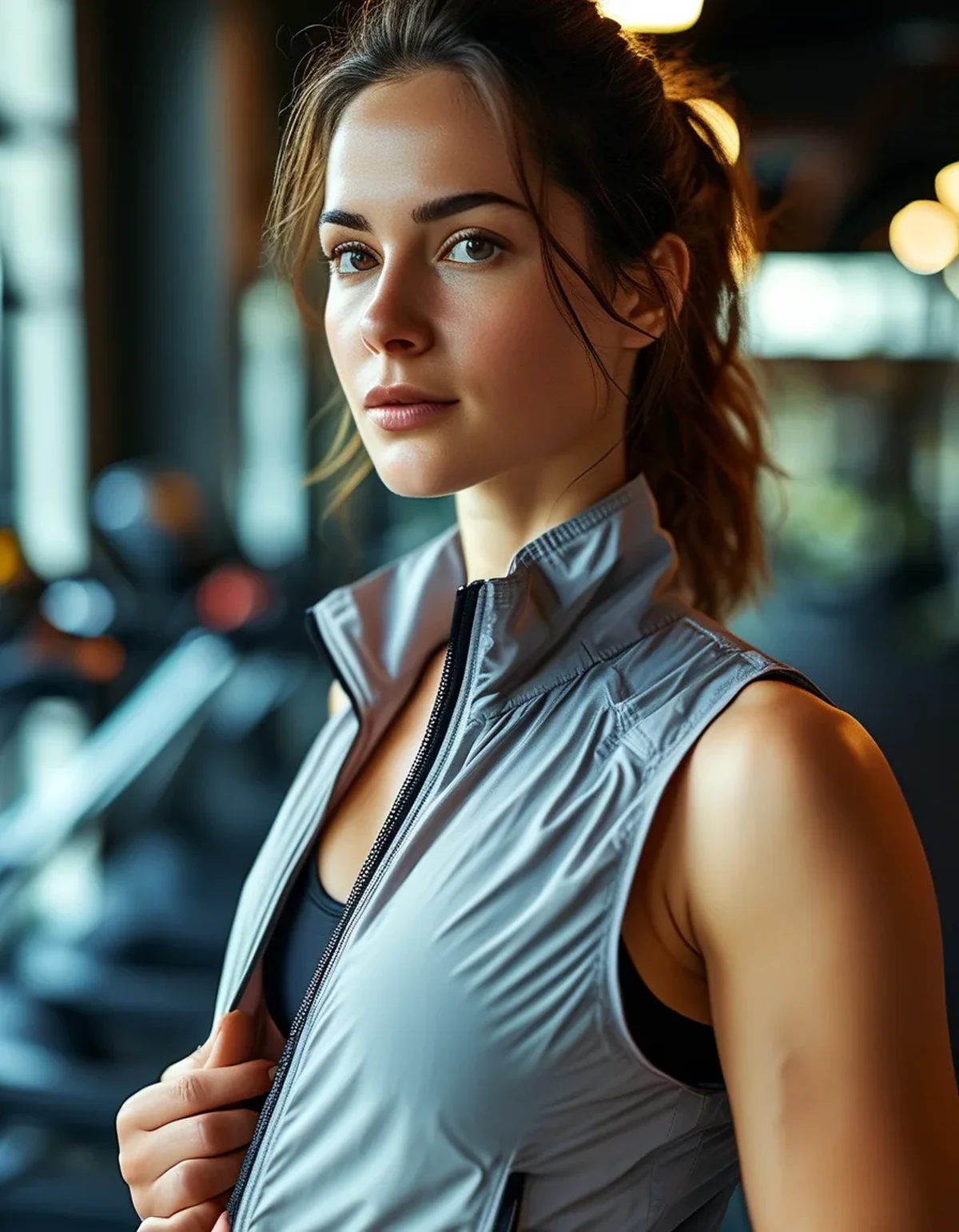
The layer: a light zip-up you actually like. It lives on during warm-up, mobility, and rest periods, and comes off for work sets and anything sweaty. Thumbholes are surprisingly functional here - they keep the sleeve anchored during stretching and keep wrists covered under vents.
The swap: one dry backup top. Rolled in the bag, deployed when the base soaks through. On double-cardio days, some people carry two.
The extras that earn their space: a small towel to put between your back and cold vinyl benches - cold equipment steals heat faster than cold air - and socks that cover the ankle for stretching areas, where floors under AC stay frigid.
Position beats fabric when you can choose. Pick the bench away from the vent, face fans away from your rest spot, and do floor work in the corner the airflow misses. Half of gym cold is a real-estate problem.
Re-warm before heavy sets after long chills. If a rest period ran long and cold - a chat, a queue for the rack - spend thirty seconds re-priming: bodyweight squats, arm circles, a light set. Treat it as re-entering the workout, because thermally, you are.
And put the layer back on before you leave. Walking out sweat-damp into a 95-degree evening feels fine; the blasted-AC car ride after is where the post-gym chill actually happens.
FAQ: Cold Gym Questions, Answered
Why do I get so cold between sets at the gym?
Because rest periods combine still standing, sweat-damp skin, and moving AC air - the three fastest ways to lose surface heat. A light layer worn during rests and stripped for work sets keeps your warm-up from bleeding away.
What should I wear to a freezing air-conditioned gym in summer?
A wicking base, full-length leggings, and a thin zip-front layer for rests and warm-up. Add a dry backup top for after the sweaty block and a towel for cold benches. Light and removable beats warm and permanent.
Does being cold actually hurt my workout?
It erodes it at the edges: muscle temperature and range of motion drop between sets, stiffness returns to mobilized areas, and breathing gets shallower. None of it is dangerous - it just wastes warm-up you already paid for.
Should I wear leggings or shorts to an air-conditioned gym?
For lifting sessions with long rests, leggings win in summer AC - they keep the biggest working muscles warm through rest periods at almost no cost during sets. Shorts make more sense for continuous cardio, where you generate heat the whole time.
How do I stop feeling clammy after cardio in a cold gym?
Swap into the dry backup top immediately and zip the light layer over it. The clammy chill comes from evaporating sweat under moving air, and a dry base ends it in about two minutes.
TL;DR:
- Gyms cool for peak cardio effort, so resting lifters sit in cold moving air - especially in August, when systems run hardest.
- Cold rest periods bleed away your warm-up, stiffen mobilized joints, and shallow your breathing.
- The kit: wicking base, full-length leggings, thin zip layer for rests, dry backup top, towel for cold benches.
- Zip-front only - a layer you operate ten times a session has to cost nothing.
- Pick real estate away from vents and re-prime after long chilled rests.
Dress for the room you train in, not the parking lot you cross. The layer in your bag is warm-up insurance, and it pays out every rest period.
See It in Motion
Seen here: High Waist Yoga Leggings with Inner Pocket — shop it on bubblelime.com
Keep Reading
This article is for general informational and styling purposes only. Fit, sizing, and product availability may vary.