The 60-Degree Morning Problem: When Should You Actually Start Layering?
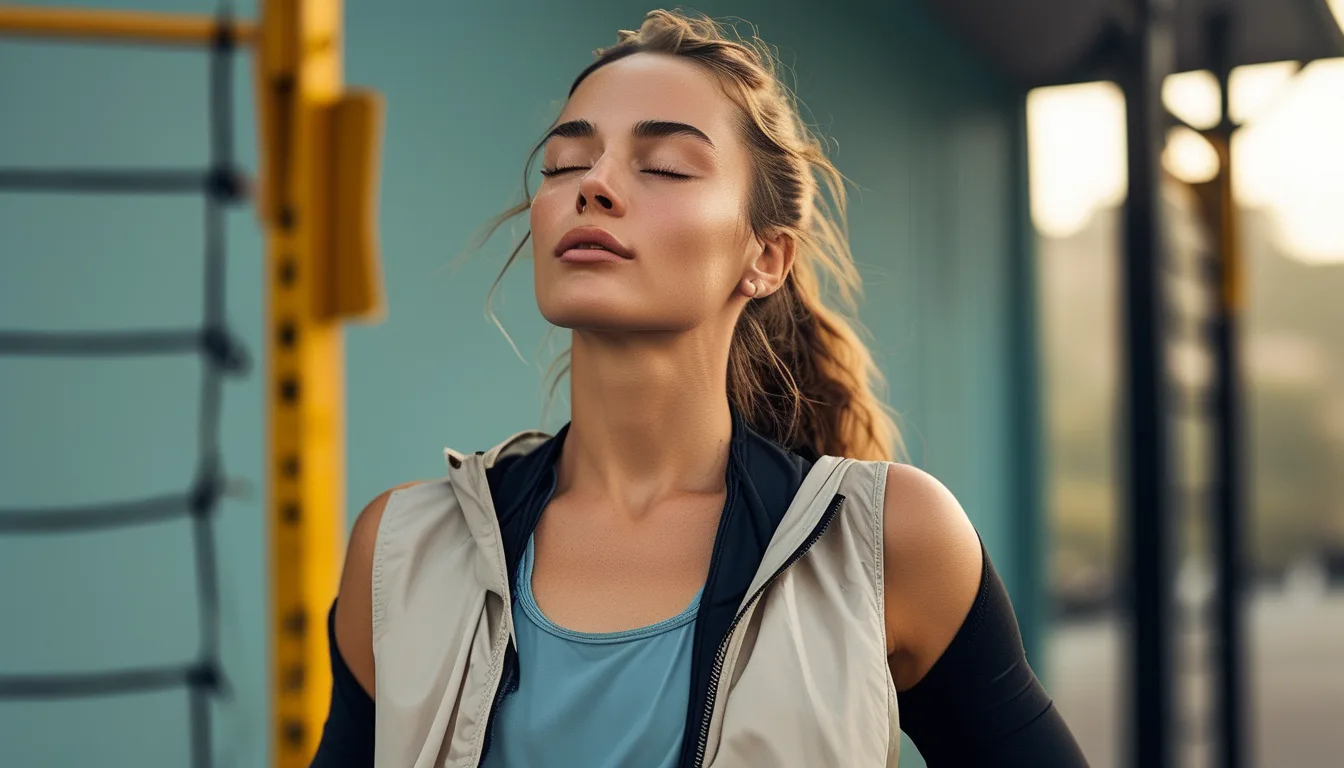
Quick Answer: Layer based on the temperature you will experience standing still, not the temperature you will train in. Below about 60F on the way to the gym, one removable layer earns its place. Below 50F, add long sleeves under it. Above 60F, a layer you carry the whole session is usually just something to lose. The most useful piece is a full-zip you can remove in ten seconds without touching your hair or your headphones.
There is a specific week every fall where everyone in the gym is either overdressed or underdressed, and it is happening now.
The cause is that we dress for the number on the phone rather than for the four different environments a gym trip actually contains.
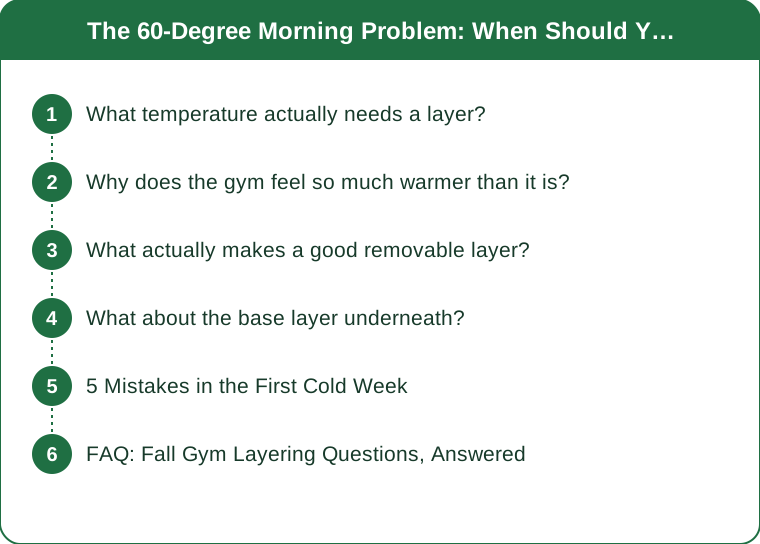
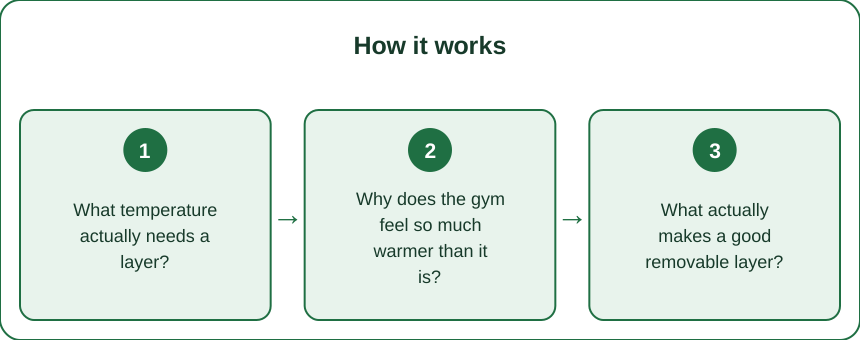
What temperature actually needs a layer?
Split the trip into the parts where you are producing heat and the parts where you are not.
Standing still at a bus stop, waiting for a light, walking slowly: your metabolic heat output is low, and this is where cold is felt.
Warming up, training, walking briskly: heat output rises 5 to 10 times over resting levels within a few minutes, and the same temperature that felt cold becomes fine.
Working thresholds for the still parts:
- Above 65F: no layer. You will carry it and resent it.
- 60 to 65F: one light removable layer for the commute, especially early morning. Optional and pleasant.
- 50 to 60F: one layer, definitely, plus consider long sleeves as your base if there is wind.
- Below 50F: two pieces, a long-sleeve base and a removable outer, plus consider hands and ears, which lose heat disproportionately and cost almost nothing to cover.
Wind changes the number more than most people account for. A 58F day with 15mph wind feels closer to 50F standing still. If your route has an exposed stretch, dress for the exposed stretch.
The mistake in one line: people layer for the coldest number they saw and then train in it.
Why does the gym feel so much warmer than it is?
Because indoor temperature is only one of the inputs, and it is not the largest one.
A gym is typically held at 65 to 70F, which sounds cool and does not feel cool once you are in it. Three things add up:
- Your own heat production. Training raises core and skin temperature substantially, and the effect persists for a while after you stop.
- Other people. A busy room at 8am is meaningfully warmer than the same room at 2pm, since bodies are heat sources.
- Humidity. Indoor humidity from sweat and breath reduces evaporative cooling, which is why a crowded class feels hotter than the thermostat suggests.
The implication for layering: whatever you wore in should come off during the warm-up, not during the third set. Plan on removing it, and plan on where it goes.
Which is the real design constraint. A layer you cannot easily stash is a layer you keep wearing longer than you should, which means you start the session already too warm and sweat more than you need to.
What actually makes a good removable layer?
The features that matter are mechanical, not thermal.
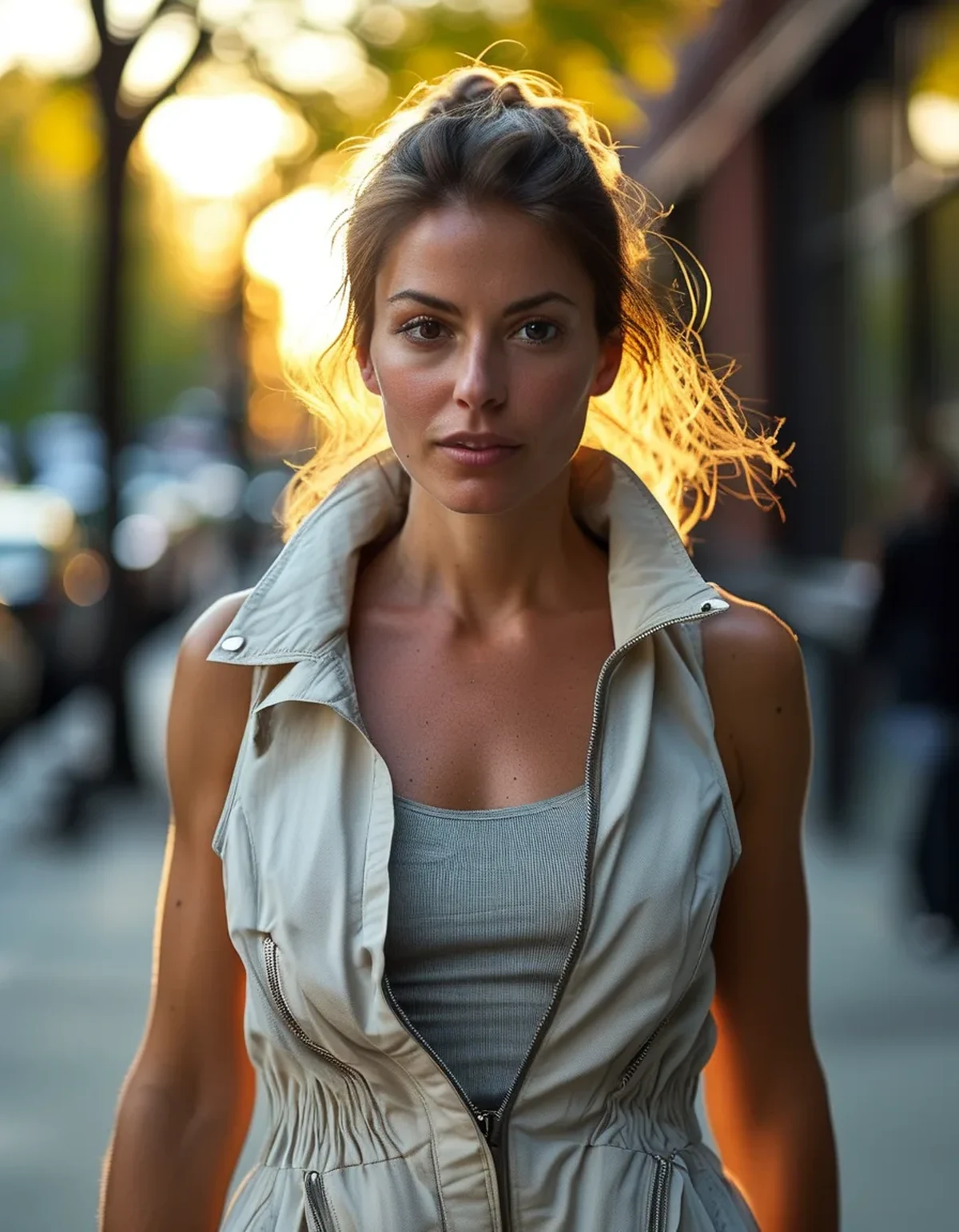
Full zip, not a hoodie pullover. This is the single most useful feature. You can remove a full zip mid-walk, one-armed, without pulling it over your head, your hair, or your headphones. Pullovers get kept on because taking them off is a production.
Packable enough to stuff in a bag or tie at the waist. If it does not compress, you will leave it on the bench and forget it. A light nylon or thin knit works. A structured jacket does not.
Thumbholes or long cuffs. Sounds like a detail, and hands are the first thing to feel cold standing still, so a cuff that covers half the palm does real work at zero bulk.
A collar that covers the neck. Neck and upper chest lose heat quickly, and a higher zip collar is worth more than a thicker fabric.
Not fleece-lined, yet. In the 55 to 65F range, fleece is too much and you will overheat before you arrive. Save it for real cold.
Pockets that close. You will be carrying a phone and keys through a change of layers, and an open pocket is how they end up on the gym floor.

What about the base layer underneath?
The base does more for comfort than the outer layer does, and it is where most people default to the wrong thing.
Prefer a synthetic or merino base over cotton. Cotton absorbs sweat and holds it against your skin, which is neutral in a warm gym and genuinely unpleasant when you step back outside into 55F air. Damp cotton in cool air is the classic post-workout chill.
Fitted beats loose for cool weather. A closer base layer traps a thin air layer against your skin and moves sweat outward. A loose one lets warm air escape and pumps cool air in as you move.
Sleeve length is the cheapest adjustment you have. A long-sleeve base under a tank or short-sleeve top adds warmth at almost no bulk and can be pushed up when you get warm. This is more flexible than a heavier outer layer.
The post-workout piece is the one everyone forgets. You finish, you are damp, and you walk out into cool air. A dry top to change into is the highest-comfort item you can put in your bag this month, and almost nobody does it until they have been cold once.
Fabric order, briefly: moisture-moving next to skin, insulation in the middle if needed, wind protection outside. Getting the order wrong, such as a cotton tee under a shell, traps moisture in exactly the wrong place.
5 Mistakes in the First Cold Week
1. Dressing for the low of the day. The forecast low happens at 5am and you are out at 7:30. Check the hourly forecast for the time you will actually be outside, which is often 5 to 8 degrees warmer.
2. Wearing the layer you cannot take off. A pullover hoodie stays on longer than it should. A full zip comes off in ten seconds. This decides how warm you start your session.
3. Ignoring hands and ears. Extremities feel cold first, and covering them is nearly weightless. Light gloves and a headband do more for perceived warmth than a thicker jacket.
4. Cotton next to skin. Fine in the gym, unpleasant on the walk home once it is damp and the air is 55F.
5. Skipping the dry change. The chill after training, when you are damp in cool air, is the actual discomfort of this season. One dry top in the bag solves it entirely.
The overlooked upside: this is the most comfortable few weeks of the year for training outdoors, and the layering question is only difficult because the range within a single hour is wide. Once you have a full zip you like and a dry top in your bag, the problem is essentially solved until it drops below 45F and becomes a different conversation.
Where we are right now: mid-August mornings are still warm in most of the US, and the first genuinely cool mornings arrive in the next three to five weeks depending on where you are. If your commute is before 7am, you will feel it first. Worth having the zip-up ready rather than buying it during the cold snap when everyone else is.
FAQ: Fall Gym Layering Questions, Answered
At what temperature should I start layering for the gym?
Below about 60F for the still parts of your trip, one removable layer is worth it. Below 50F, add a long-sleeve base underneath. Above 65F you will just carry it.
Is a hoodie or a full zip better for the gym?
A full zip, clearly. You can remove it one-armed without disturbing your hair or headphones, which means you actually take it off during the warm-up instead of the third set.
Why do I get cold after my workout and not before?
Because you are damp and your heat production has dropped. A dry top to change into is the single most effective fix, and it matters more than a heavier jacket.
TL;DR:
- Layer for the temperature you will stand still in, not the temperature you will train in.
- Rough thresholds: above 65F none, 60 to 65F one light layer, 50 to 60F layer plus long-sleeve base, below 50F add hands and ears.
- Full zip beats pullover, because removability decides how warm you start your session.
- Keep a dry top in the bag. The post-workout chill in cool air is where the real discomfort lives.
Check the hourly forecast for the time you are actually outside, not the daily low. That alone fixes most of the first cold week.
Keep Reading
This article is for general informational and styling purposes only. Fit, sizing, and product availability may vary.