What to Wear When It Is 55 in the Morning and 80 by Afternoon
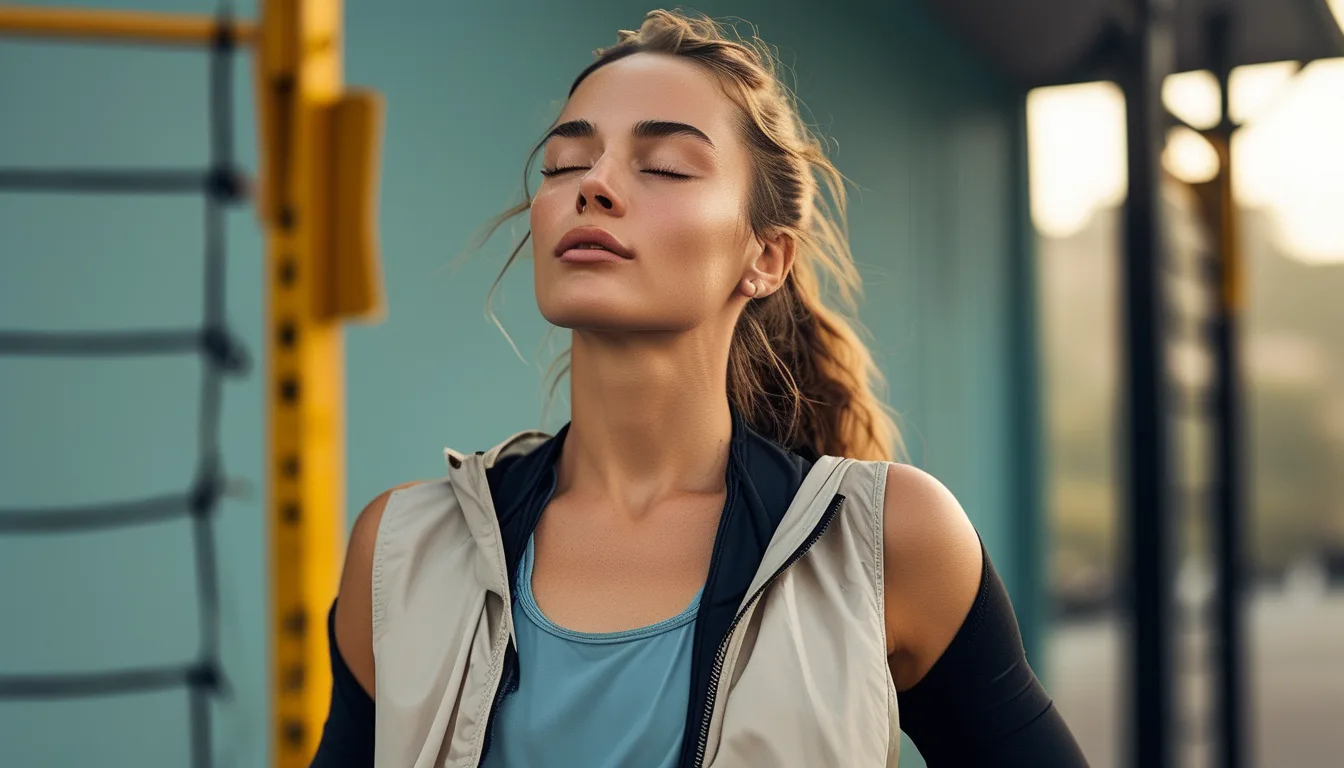
Quick Answer: Dress for about 10 to 15 degrees warmer than the actual temperature, because you’ll generate that within 10 to 15 minutes of moving. For a 55°F morning that means a tank or short sleeve as your base with a light removable layer — not a long-sleeve base you’ll be stuck in. The layer you can remove and carry matters more than the layer you start in. Choose a jacket that packs into its own pocket or ties at the waist without bouncing.
The classic late-summer mistake: dressing for the walk to the car and spending the next hour overheating.
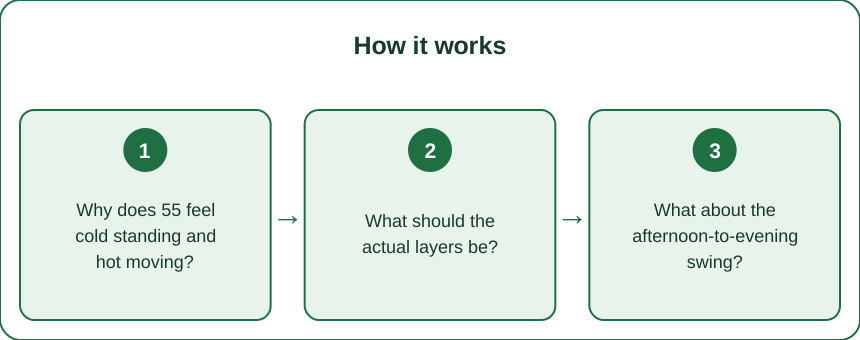
Why does 55 feel cold standing and hot moving?
Because your body’s heat production increases several-fold within minutes of starting activity, and it doesn’t come back down.
At rest you’re producing a baseline amount of metabolic heat. During moderate exercise that can rise substantially — and most of the excess has to be dissipated.
The transition takes about 10 to 15 minutes. You start cold, cross into comfortable, and then keep climbing. What felt appropriate at minute zero is usually too much by minute 15.
This is the origin of the “dress for 10 to 15 degrees warmer” rule, and it’s the single most useful heuristic in cold-weather training.
The corollary people forget: you’ll be cold for the first ten minutes and that’s correct. Being comfortable at the start means being overdressed for the other fifty.
What should the actual layers be?
Two on top for most transition-season conditions, and the removable one should be genuinely removable.
Base layer: what you’d wear if it were 15 degrees warmer. For 55°F, a tank or short sleeve. Technical fabric that moves moisture — cotton holds sweat against your skin and turns cold the moment you stop, which is the actual mechanism behind post-workout chill.
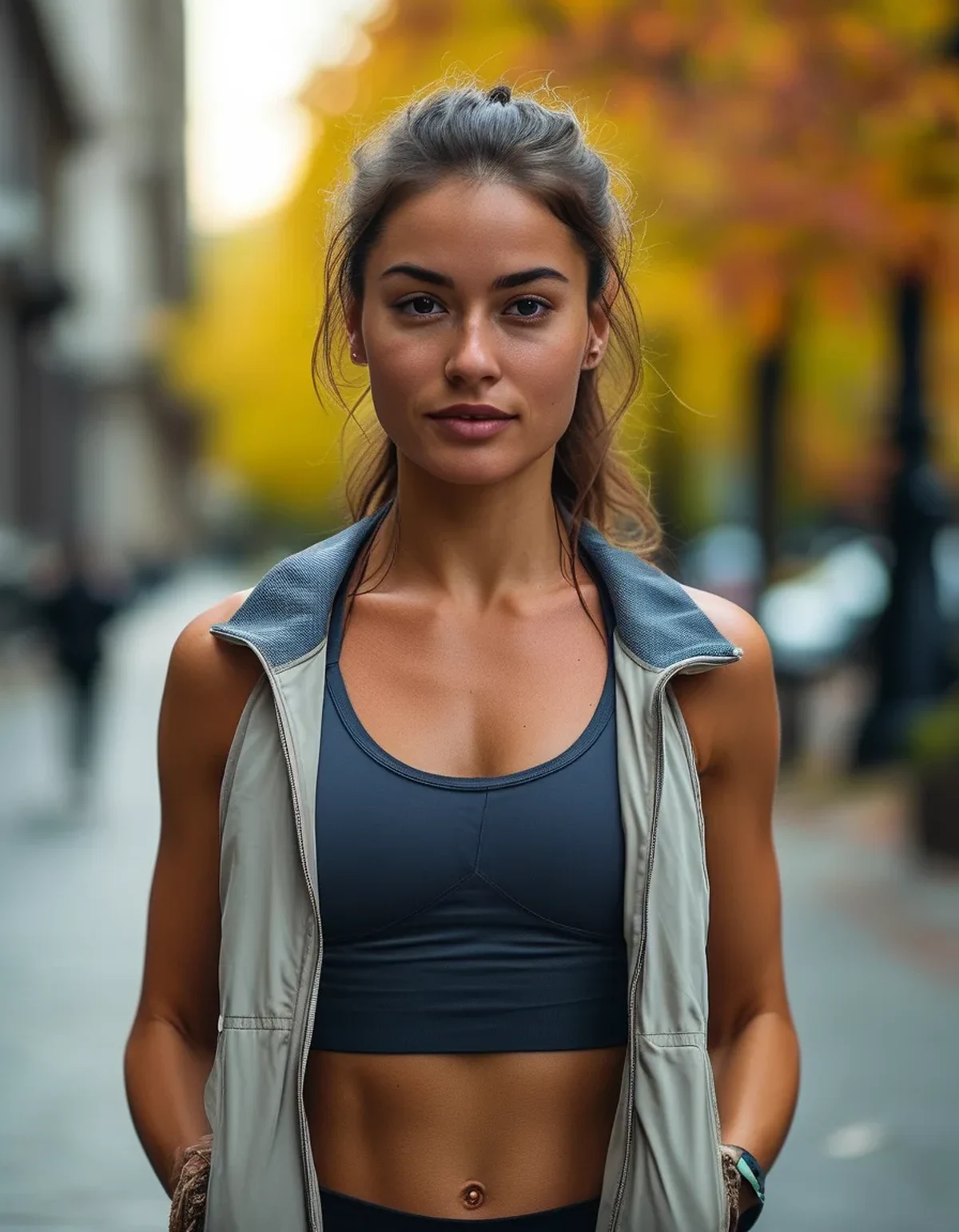
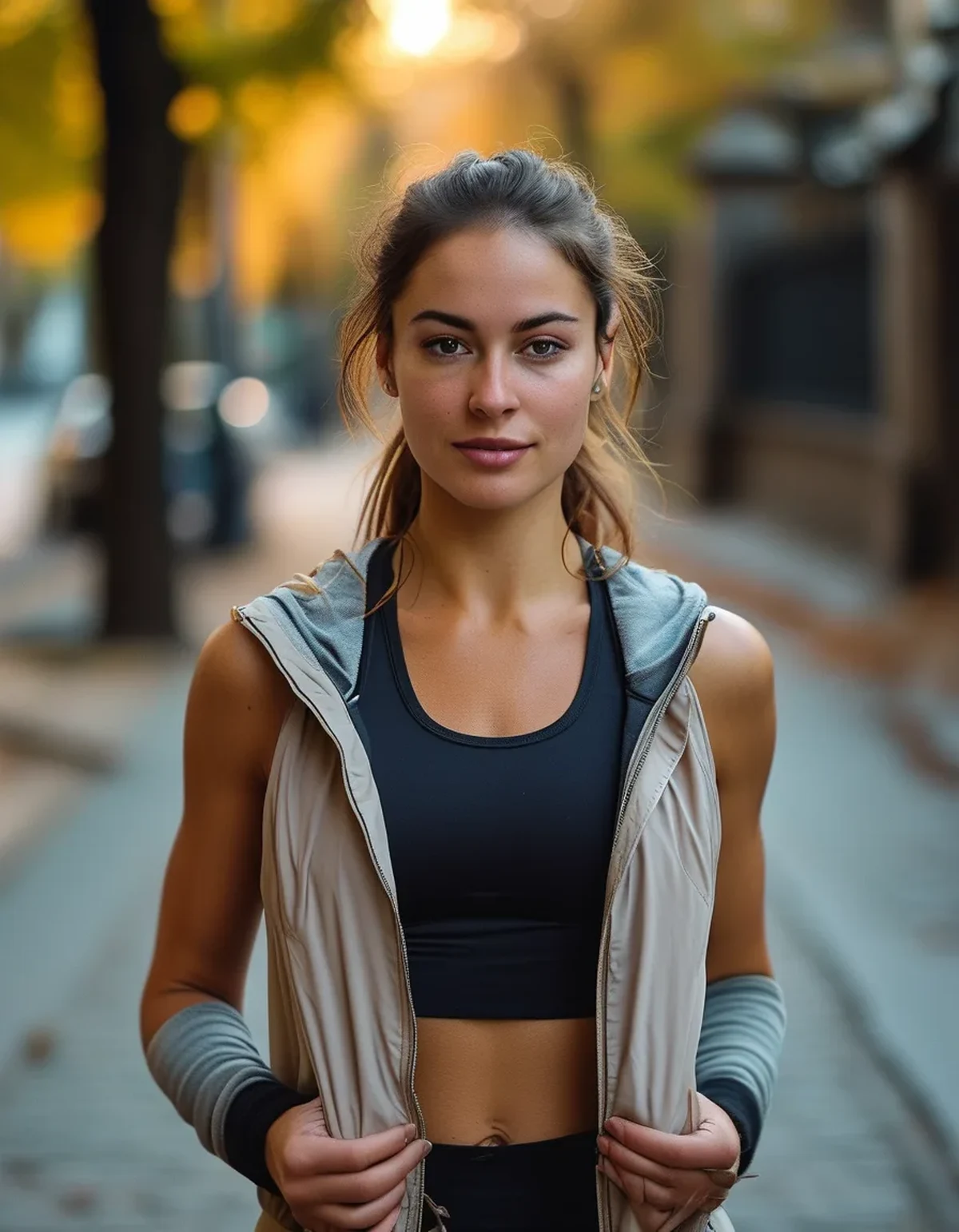
Outer layer: something you can remove and carry without annoyance. A light wind shell that packs into its own pocket, or a jacket that ties at the waist without bouncing. This is the decision that determines whether you’ll actually take it off.
Bottom: usually just one layer. Legs generate a lot of heat and are less sensitive to cold air than the torso. Full-length leggings are typically enough well below 55°F.
Extremities are where the real cold is felt. Light gloves and a headband are small, packable, and address the parts that stay cold longest. They’re also the easiest things to remove and pocket.
Have a dry layer for afterward. The post-session chill from damp clothing in cool air is worse than anything during the session.
What about the afternoon-to-evening swing?
The reverse problem, and it catches people who dressed for a warm afternoon start.
Late summer evenings drop faster than the daytime high suggests. A 6pm start at 80°F can finish at 65°F with the sun gone, and you’re now damp in cooling air.
Carry the layer even when it seems absurd. A packable shell weighs almost nothing and the cost of not having it is a genuinely unpleasant last mile.
Sun position matters as much as temperature. Shade in transition season can feel 10 degrees colder than sun, which is why a route that was comfortable outbound is cold on the return.
Wind is the multiplier. A light wind shell does more for perceived warmth than a much heavier insulating layer when wind is the issue, because it addresses convective loss directly.
Post-workout is the highest-risk window. Change out of damp clothing or add a dry layer within a few minutes of stopping. This is where people actually get cold, and it’s entirely preventable.
5 Mistakes on Transition-Season Days
1. Dressing for the temperature at the door. The most common error and the source of most overheating. Add 10 to 15 degrees mentally before choosing.
2. Cotton anywhere in the system. It absorbs sweat, doesn’t release it, and becomes a cold wet layer against your skin the second you slow down. This matters far more in cool weather than in summer.
3. A jacket that’s annoying to carry. If removing it means holding it in your hand for 40 minutes, you won’t remove it, and you’ll overheat instead. Packability is a functional requirement, not a nice extra.
4. Overdressing the legs. Legs are large heat producers and tolerate cool air well. Doubling up on the bottom is almost never necessary above freezing and mostly produces sweating.
5. No plan for after. The dangerous chill comes post-session, when heat production stops and you’re standing around damp. A dry shirt in the bag solves it completely.
How do I know if I got it right?
One check at minute 10 and one at minute 30.
At minute 10, you should be just about comfortable — not warm yet. If you’re already warm, you’re overdressed for the rest of the session.
At minute 30, you should be warm but not soaked. If your base layer is saturated at moderate effort, there’s too much insulation trapping moisture.
If you were cold for the first five minutes and comfortable after, that’s a correct call, even though it didn’t feel like one at the start.
Keep a two-line note for a few weeks. Temperature, what you wore, how it went. After five or six sessions you’ll have a personal chart that beats any general rule, because individual variation in this is genuinely large — some people run hot and some run cold at the same temperature and the same effort.
Adjust for effort, not just temperature. An easy recovery session generates far less heat than intervals, and the same outfit will feel completely different between the two.
FAQ: Transition-Season Layering Questions, Answered
Is merino worth it over synthetic?
For cool-weather base layers, many people find it worth it — it manages moisture well, retains some warmth when damp, and resists odor. It’s more expensive and less durable. Synthetics dry faster and cost less. Either beats cotton by a wide margin.
Should I wear a vest instead of a jacket?
Vests work well in transition season specifically because they warm the torso while letting arms dissipate heat. If you tend to overheat in a full jacket but get cold in just a base layer, a vest often lands exactly in between.
What about warming up indoors first?
It helps — starting with your body already producing heat means less time in the uncomfortable cold phase, and you can dress lighter from the start. Five minutes of easy movement inside is a genuinely useful trick on cold mornings.
How cold is too cold to train outside?
Most healthy people can train comfortably well below freezing with appropriate layers. Judgment matters more for ice underfoot, wind chill, and air quality than for temperature alone. If you have a cardiac or respiratory condition, cold air exercise is worth discussing with your doctor.
This is general information, not medical advice.
TL;DR: Dress for minute 15, not minute zero.
- Add 10 to 15 degrees to the actual temperature when choosing. You’ll generate that within 10 to 15 minutes.
- Being cold for the first five minutes is correct. Comfortable at the start means overdressed for the rest.
- The removable layer is the whole system. If it’s annoying to carry, you won’t take it off.
- No cotton. It holds sweat and turns cold the moment you slow down.
- One layer on the legs is almost always enough above freezing.
- The real chill is post-session. Have a dry layer in the bag.
Check at minute 10: just about comfortable, not warm yet. That’s the calibration.
Keep Reading
This article is for general informational and styling purposes only. Fit, sizing, and product availability may vary.