What to Layer for the First Cool Morning Run of the Season

Quick Answer: Dress for the temperature 10 minutes into the run, not for how it feels at the door. The standard adjustment is to add about 10°C to the actual temperature and dress for that. For a 12°C morning that means a fitted long-sleeve base plus full-length leggings, with a light wind layer only if it is windy or wet. You should feel slightly cold for the first five minutes - if you feel comfortable standing outside, you are overdressed.
The pieces matter less than the principle, and the principle is that your body produces a lot of heat.
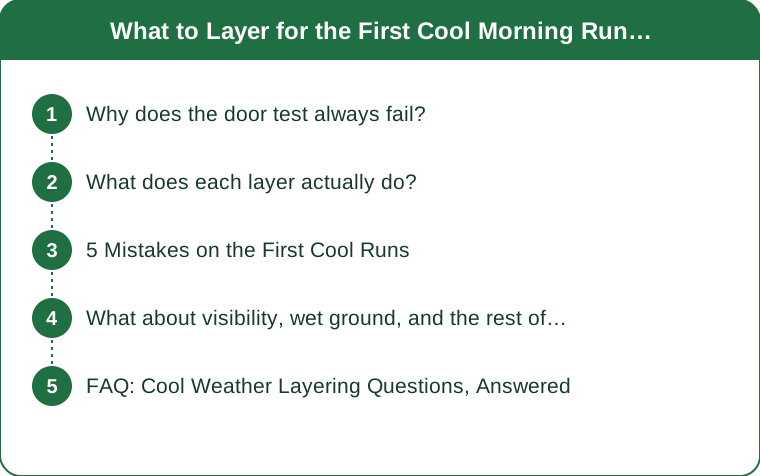
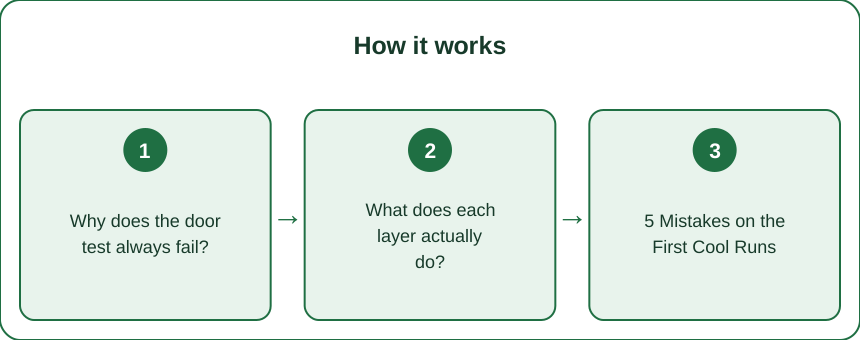
Why does the door test always fail?
Because standing still and running are different thermal situations.
Running raises your metabolic rate several times over resting. That heat has to go somewhere, and within about ten minutes your body reaches a new equilibrium meaningfully warmer than when you started.
The 10-degree rule captures this. Add roughly 10°C to the outdoor temperature and dress for that number. A 12°C morning is functionally a 22°C run. A 5°C morning is functionally 15°C, which is much less clothing than most people put on.
Wind changes the calculation more than temperature does. Wind strips the thin layer of warm air next to your skin, and the effect grows sharply once you are damp. A windproof outer layer addresses this more efficiently than adding insulation.
The first five minutes should feel slightly uncomfortable. This is the single most reliable rule of thumb in cold-weather running. If you are comfortable at the door, you will be overheating at mile two.
And overheating is not just unpleasant. Sweat-soaked clothing in cool air becomes a cooling system the moment you slow down, which is why people get genuinely cold at the end of runs they started overdressed for.
What does each layer actually do?
Three jobs, and one of them is negotiable most mornings.
Base layer - move moisture. Fitted, next to the skin, synthetic or merino. Never cotton - it absorbs sweat, holds it against you, and stops insulating entirely once wet.
Mid layer - insulate. A light fleece or thicker long-sleeve. This is the layer most people add too early in the season; at 10 to 15°C most runners do not need it at all once moving.
Outer layer - block wind and rain. A light shell. On a still, dry morning above about 5°C, most runners do not need this either - but it is the layer worth carrying because conditions change.
A rough guide by temperature:
- 15°C and above: short sleeve, shorts or capri leggings.
- 10 to 15°C: long-sleeve base or short sleeve, full-length leggings.
- 5 to 10°C: long-sleeve base, full-length leggings, light gloves.
- 0 to 5°C: long-sleeve base, light mid layer or wind shell, thermal leggings, gloves, headband.
- Below 0°C: all of the above plus a proper hat and consideration of a face covering.
Full-length leggings arrive earlier than most people expect. Legs feel fine at the door and cold muscles at 8°C are where early-autumn calf and hamstring niggles come from.
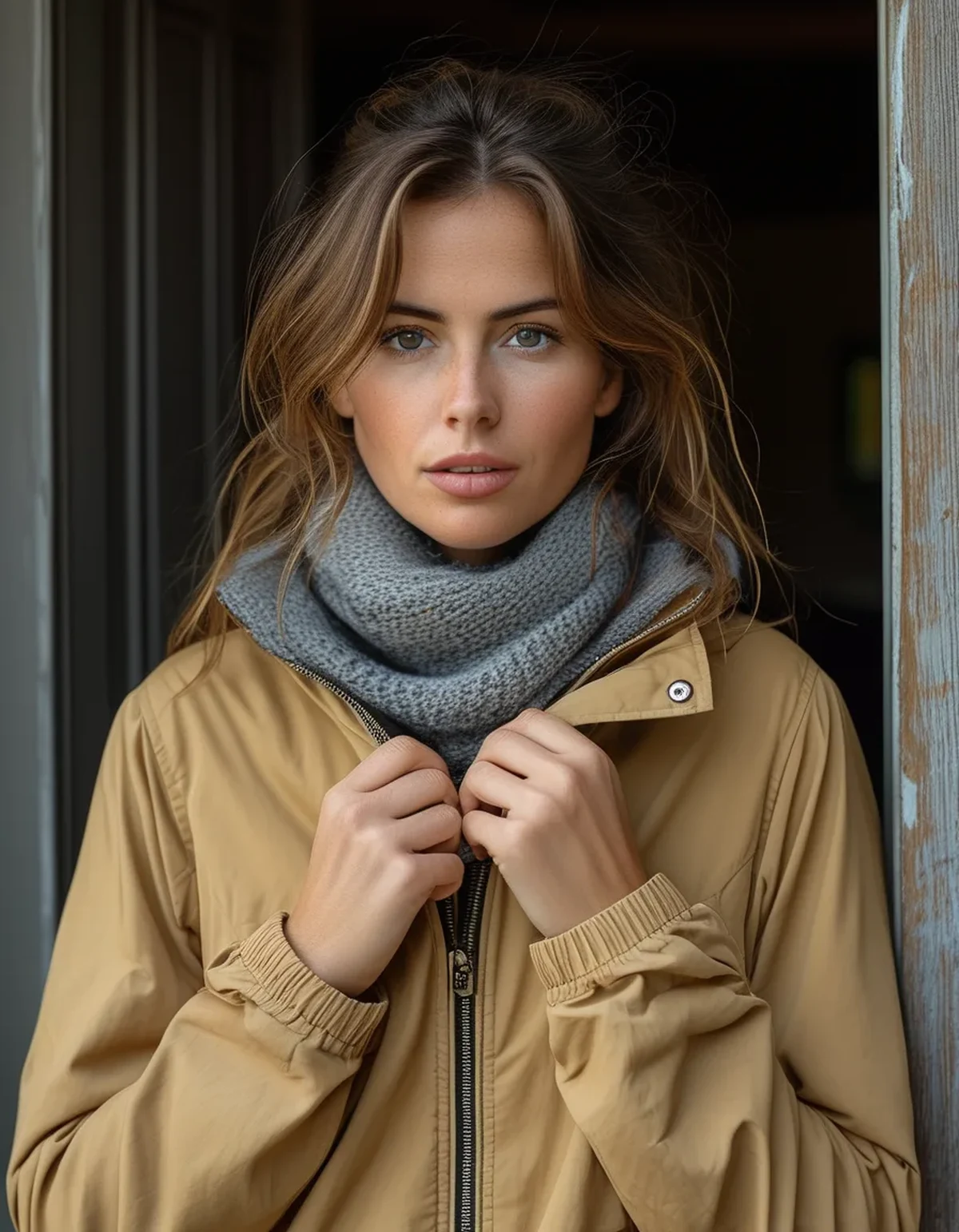
5 Mistakes on the First Cool Runs
1. Dressing for the door. The most common error by a wide margin. Dress for ten minutes in, and accept a slightly cold start.
2. Wearing cotton anywhere. A cotton t-shirt or cotton socks turns into a wet, cold layer that stays wet for the whole run. Socks matter as much as tops here - wet cotton socks in cool weather are how blisters happen.
3. Skipping the warm-up because it is cold outside. Cold muscles and tendons are less compliant, and the first kilometre in cool air is where calves complain. Add five minutes of dynamic warm-up indoors - leg swings, walking lunges, ankle circles - before going out.
4. Forgetting extremities. Hands, ears, and head lose heat quickly and are cheap to cover. Light gloves and a headband weigh almost nothing and extend the comfortable temperature range by several degrees. Gloves can be stuffed in a waistband when you warm up; a jacket cannot.
5. Not planning for after. Standing around wet in cool air after a run drops your temperature fast. A dry layer waiting at home, and getting changed within ten minutes, prevents the post-run chill that people blame on the run itself.
What about visibility, wet ground, and the rest of the season?
The things that arrive with the cool mornings rather than after them.
Daylight is contracting by 2 to 3 minutes a day. The 6:30am run that was bright in August is dim by late September. Reflective detail on the outer layer, not just the shoes, and a head torch for genuinely dark mornings.
Wet leaves are as slippery as ice on painted lines, drain covers, and wooden bridges. Shorten your stride slightly on wet corners rather than braking mid-turn.
Shoe wear catches people out now. A summer of mileage plus wet ground means less grip precisely when you need more. Check outsole wear and midsole creasing - a shoe that was fine on dry pavement in July can be genuinely unsafe on wet leaves in October.
Layers you can shed need somewhere to go. A jacket around the waist is fine; a mid layer is not. A vest with pockets, or a waistband you can tuck gloves into, is what makes shedding practical rather than theoretical.
And the seasonal habit worth setting now: lay clothes out the night before. The single biggest predictor of running on a cold dark morning is not having to make decisions at 6am.
This is general information, not medical advice.
FAQ: Cool Weather Layering Questions, Answered
How cold does it need to be for long sleeves?
Most runners move to a long-sleeve base between 10 and 15°C, though this varies a lot by individual and by pace. Slower runners generate less heat and generally need a layer earlier.
Should I wear a jacket if it is windy but not cold?
Usually yes - a light windproof shell addresses wind chill much more efficiently than extra insulation, and it can be unzipped or removed once you warm up.
When do I switch to full-length leggings?
Many runners switch around 12 to 15°C. Cold muscles are less compliant and early-autumn calf and hamstring complaints are common, so erring earlier on legs is sensible even while your top half stays light.
Is merino worth it over synthetic?
Merino manages odour better and stays warmer when damp; synthetics dry faster and cost less. Both work well - the important thing is that neither is cotton.
How do I stop my hands from being freezing for the first mile and boiling after?
Wear light gloves you can remove and tuck into a waistband. Hands are the cheapest thing to adjust mid-run and the most annoying to get wrong.
TL;DR:
- Dress for 10 minutes into the run: add roughly 10°C to the actual temperature and dress for that.
- You should feel slightly cold for the first five minutes - comfortable at the door means overdressed at mile two.
- No cotton anywhere, including socks; a windproof shell beats extra insulation on windy mornings.
- Full-length leggings come out earlier than you think (around 12 to 15°C), plus light gloves and a headband to extend the range cheaply.
- Add reflective detail, a longer warm-up, and a shoe check as light drops and ground gets wet.
Get these decisions right once and they hold for the next four months. The runners who keep going through autumn are rarely the toughest ones - they are the ones whose clothes are laid out and whose first mile is not miserable.
See It in Motion
Seen here: Super High Waist Embossed Yoga Leggings with Inner Pocket — shop it on bubblelime.com
Keep Reading
This article is for general informational and styling purposes only. Fit, sizing, and product availability may vary.