The Actual Order to Layer Up for an Outdoor Winter Run

Quick Answer: Base layer for moisture-wicking, a thin insulating mid-layer for warmth, and a wind- or water-resistant outer shell only if it’s windy, wet, or below freezing — in that exact order, from skin outward. Most runners overdress the mid-layer and regret it by mile two.
The classic mistake is dressing for how cold it feels standing still at the front door, not how warm you’ll feel five minutes into a run. Layering order — not just layer count — is what prevents both freezing and overheating.

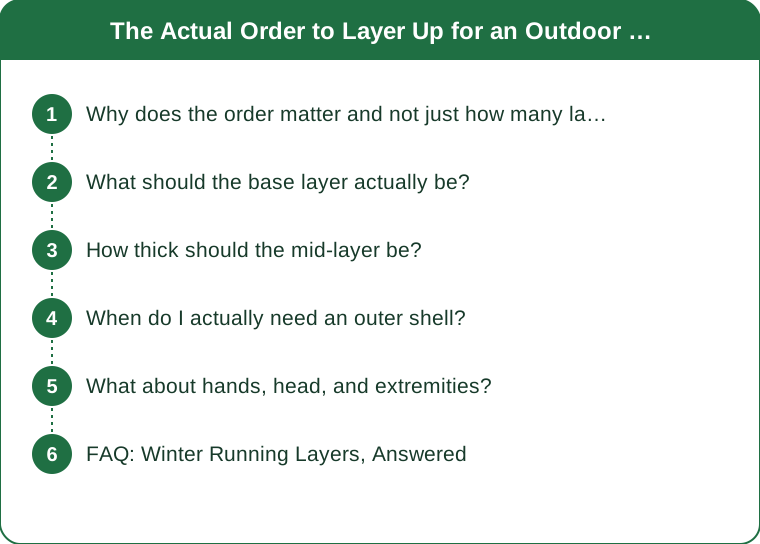
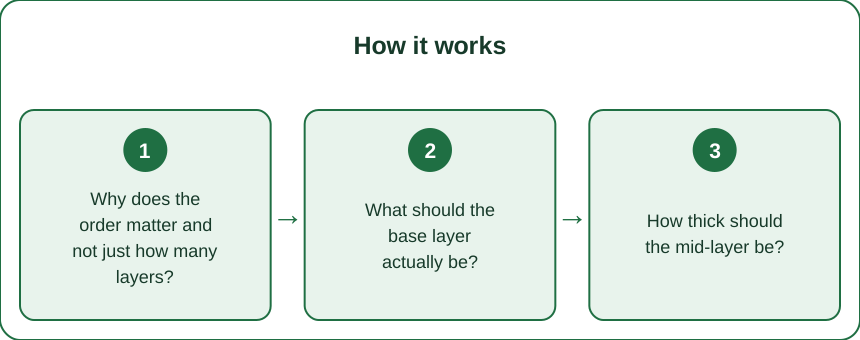
Why does the order matter and not just how many layers?
Each layer has one job, and putting them in the wrong order defeats the purpose. A moisture-wicking base layer against the skin pulls sweat away from your body; a cotton base layer instead traps that moisture and makes you colder as it evaporates, regardless of how many layers go on top.
What should the base layer actually be?
A synthetic or merino wool fabric, snug (not tight) against the skin. This is the layer doing the most work — it needs direct skin contact to wick moisture, so it goes on first no matter how many layers follow.
How thick should the mid-layer be?
Thinner than most people default to. A lightweight fleece or thermal layer is usually enough for runs down to about 20-30°F once you factor in the heat your body generates while moving — a thick mid-layer built for standing-still cold usually leads to overheating and unnecessary sweat buildup by the second mile.

When do I actually need an outer shell?
Only when wind, rain, or snow is a factor, or temperatures drop below roughly 20°F. On a calm, dry, moderately cold day, base plus mid-layer alone is often enough — an unnecessary shell traps heat and moisture that has nowhere to go.
What about hands, head, and extremities?
Extremities lose heat fastest and are worth layering carefully even when the torso doesn’t need much: a thin wicking glove liner under a wind-resistant outer glove, and a moisture-wicking hat or ear band rather than a heavy fleece hat that traps sweat at the scalp.
FAQ: Winter Running Layers, Answered
How do I know if I’m overdressed before I even start running?
A reliable rule: if you feel comfortably warm standing still at the door, you’re likely overdressed for the run — aim to feel slightly cool for the first 5-10 minutes, since running generates significant body heat quickly.
Should I size my outer shell differently than normal running gear?
Slightly roomier than your base layers works best, enough to allow airflow and layer movement without restricting your stride or trapping excess heat against the body.
What temperature actually requires a full three-layer system?
Most runners find three full layers necessary only below about 20°F, or above that with significant wind chill — above 30°F, a base layer plus a light mid-layer is usually sufficient for most effort levels.
TL;DR:
- Base layer (wicking, snug) always goes on first, regardless of temperature
- Keep the mid-layer thinner than instinct suggests — your body generates real heat while running
- Save the outer shell for wind, rain, snow, or genuinely sub-20°F days
- Feeling slightly cool at the start of a run is normal and expected, not a sign of underdressing
Dress for mile two, not for standing at the front door.
Keep Reading
This article is for general informational and styling purposes only. Fit, sizing, and product availability may vary.