The Gym Layering Mistake That Has You Overheating by Minute 10

Quick Answer: The most common gym layering mistake is dressing for how cold you feel walking in, not for the body heat you’ll generate 10-15 minutes into your warm-up — the fix is a easily-removable outer layer, a breathable moisture-wicking base layer, and avoiding cotton, which traps heat and sweat once you’re actually working.
The outfit that feels perfectly warm in the parking lot is often exactly wrong by the time your heart rate climbs.
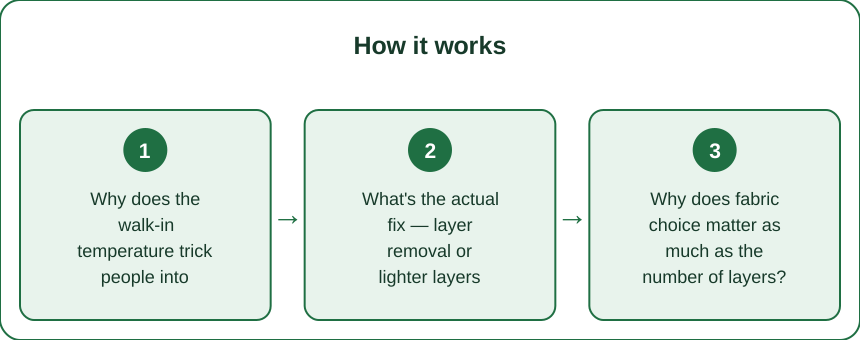
Why does the walk-in temperature trick people into overdressing?
The body’s temperature at rest in a cold parking lot or locker room is completely different from 10-15 minutes into a warm-up, once heart rate rises and blood flow increases to working muscles. Dressing to feel comfortable in that first cold moment almost guarantees overheating shortly after, since the outfit doesn’t account for the body’s own heat generation once movement starts.
What’s the actual fix — layer removal or lighter layers from the start?
The most practical fix is layering for easy removal, not layering lighter from the start, since you still need warmth for the walk in and any waiting around before starting. A zip-up outer layer that comes off within the first 10 minutes, worn over a breathable base layer meant to stay on the whole session, solves both the walk-in cold and the mid-workout heat.
Why does fabric choice matter as much as the number of layers?
Cotton retains sweat and heat against the skin rather than wicking it away, which is part of why a cotton layering piece feels fine at first and then uncomfortably damp and hot as a workout progresses. Moisture-wicking synthetic or wool-blend base layers move sweat away from skin, which regulates temperature far better than cotton regardless of how many layers are involved.

Does the order of layers actually affect how quickly you overheat?
Yes — a breathable base layer directly against skin, with a looser insulating mid-layer, and an easily removable outer layer traps and releases heat more effectively than layers of similar thickness in the wrong order. Wearing a thick, non-breathable layer directly against skin, for example, traps heat close to the body even if outer layers are removed, so overheating can persist longer than expected.
What’s a reasonable layering system for a typical cold-weather gym session?
A moisture-wicking base layer, kept on the entire session, plus a zip-up hoodie or jacket removed within the first 10-15 minutes covers most cold-weather gym scenarios without overcomplicating things. Bringing a small bag or designated spot to store the removed layer, rather than tying it awkwardly around your waist, keeps the system practical during an actual workout.
5 Looks to Try for Cold-Weather Gym Layering
Look 1: Wicking tank top + zip-up hoodie + joggers, hoodie removed after warm-up. Look 2: Long-sleeve wicking base + light vest, vest removed once heart rate rises. Look 3: Wicking crop + oversized zip jacket for the walk in, jacket off within 10 minutes. Look 4: Thermal leggings + wicking top + removable arm warmers, warmers pulled off separately from the rest. Look 5: Full base layer set for outdoor-adjacent facilities (unheated garages, outdoor bootcamps), with a heavier removable shell for the coldest first minutes.
FAQ: Gym Layering and Overheating Questions, Answered
Should you remove layers even if you still feel a little cold?
Yes, if heart rate has clearly risen and a warm-up is underway — the cold feeling is usually about to reverse quickly once movement continues.
Is it fine to just wear one heavy layer instead of multiple thin ones?
Multiple thinner, removable layers give more control than one heavy piece, which either stays on and overheats you or comes off and leaves you underdressed for any standing-around moments.
Does this layering advice change for outdoor cold-weather workouts specifically?
Outdoor sessions need a slightly heavier removable outer layer and more attention to extremities (hands, ears), but the same core principle — breathable base, removable outer — still applies.
TL;DR:
- Dressing for the cold walk-in temperature, not the warmed-up body, is the core mistake
- An easily removable outer layer over a breathable base layer solves both problems
- Cotton traps sweat and heat; moisture-wicking fabric regulates temperature far better
- Layer order matters — breathable base against skin, insulation over it, removable shell outside
The right cold-weather gym outfit isn’t about warmth alone — it’s about being able to shed exactly what you don’t need the moment your body starts generating its own heat.
Keep Reading
This article is for general informational and styling purposes only. Fit, sizing, and product availability may vary.