How to Layer for Workouts That Start Outside and Finish Indoors (Or the Reverse)
Quick Answer: For workouts that transition between outdoor and indoor environments, the most reliable strategy is a light, easily removable outer layer for the outdoor portion, a moisture-wicking base layer that works in both settings, and a small bag or clip to carry the outer layer once indoors, rather than trying to find one outfit that works equally well in both temperatures.
A single outfit that feels right for a cold outdoor warm-up almost always feels wrong ten minutes later under gym lighting and indoor heating.

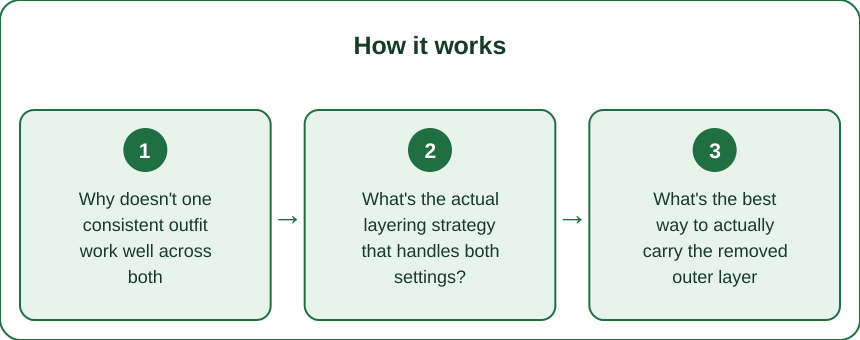
Why doesn’t one consistent outfit work well across both environments?
Outdoor temperature and wind exposure demand more insulation and wind resistance than an indoor gym, which is climate-controlled and often actively heated by body movement in the room. An outfit calibrated for outdoor cold will overheat within minutes once the workout moves indoors, while an outfit calibrated for indoor comfort leaves someone underdressed and cold during the outdoor portion.
What’s the actual layering strategy that handles both settings?
A moisture-wicking base layer worn the entire time (both outdoor and indoor portions), paired with a light, packable outer layer — a wind jacket or light fleece — worn only outdoors and removed the moment the workout shifts indoors. This two-part approach avoids both underdressing outside and overheating inside, without needing a full outfit change.
What’s the best way to actually carry the removed outer layer during the workout?
A small drawstring bag, gym bag left at the entrance, or a layer with a built-in wraparound clip around the waist all work better than trying to hold it or leave it in a pile, which gets forgotten or lost track of mid-session. Planning where the layer goes before starting the workout avoids an awkward mid-session scramble.

Does the order matter — outdoor-then-indoor versus indoor-then-outdoor?
Both directions benefit from the same core strategy, but outdoor-then-indoor is more common and slightly easier, since removing a layer mid-workout is simpler than adding one back on while already warmed up and sweaty. Indoor-then-outdoor transitions (like a gym session followed by an outdoor run) benefit from having the outer layer easily accessible right at the point of transition, since sweat-dampened skin cools fast once outside.
What Nobody Tells You About Mixed-Environment Layering
Sweat-dampened base layers cool the body significantly faster once outdoors than dry skin does, which is why the indoor-to-outdoor transition direction often catches people off guard more than the reverse — someone who felt perfectly warm mid-workout can suddenly get quite cold within a minute or two of stepping outside in the same clothes.
FAQ: Indoor-Outdoor Workout Layering, Answered
What fabric works best as the base layer for this kind of transition?
A synthetic or wool-blend moisture-wicking fabric works better than cotton, since cotton retains moisture and gets uncomfortably cold and heavy once sweat builds up, especially during the outdoor portion.
Is a vest a good outer layer option for this kind of workout?
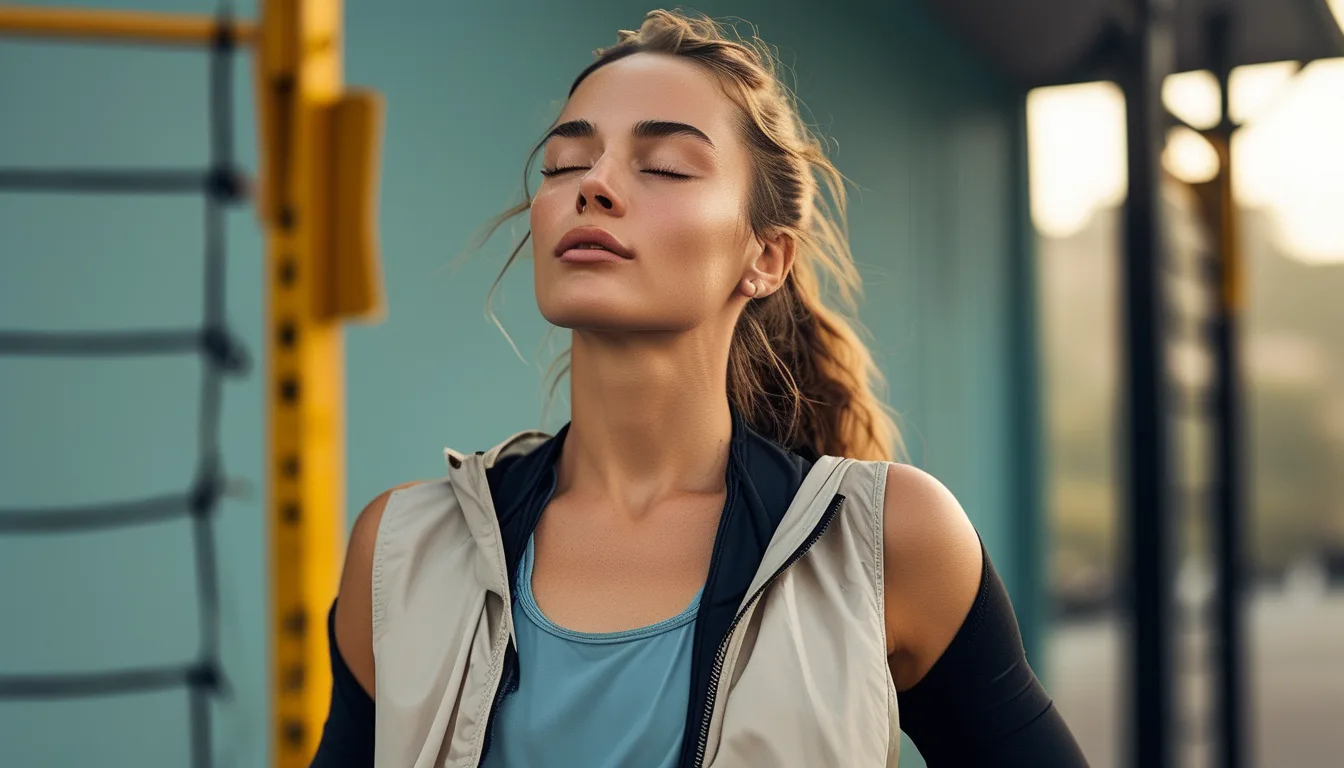
Yes — a vest provides core warmth without restricting arm movement or adding as much bulk as a full jacket, making it a popular choice specifically for transition workouts.
How cold does it need to be outside before this two-layer approach becomes necessary?
Roughly once outdoor temperatures drop into the 40s Fahrenheit or below, a dedicated outer layer becomes noticeably more useful than relying on the base layer alone to stay comfortable during the outdoor portion.
TL;DR:
- A single outfit rarely works well for both outdoor cold and indoor heat in one session
- A wicking base layer plus a removable outer layer handles both settings without an outfit change
- Planning where the removed layer goes avoids a mid-workout scramble
- Sweat-dampened skin cools fast outdoors, which makes indoor-to-outdoor transitions trickier than the reverse
The fix isn’t finding the perfect single outfit — it’s building a simple two-part system that adapts as the environment changes mid-workout.
Keep Reading
This article is for general informational and styling purposes only. Fit, sizing, and product availability may vary.